

Advanced Depth of Field Calculator
Professional photography tool with macro support, diffraction analysis, and visual comparisons
Camera Settings
Visual Depth of Field
Depth of Field Results
Photography Tips
• Adjust your settings to see personalized photography tips
Advanced Settings
DOF Analysis Chart
Aperture Comparison Table
| f-stop | DOF (m) | Near Limit (m) | Far Limit (m) | Diffraction |
|---|
Macro Photography Calculator
Macro DOF Results
Macro Photography Tips
Equipment Tips
- • Use a sturdy tripod for sharp images
- • Consider focus stacking for maximum DOF
- • Use manual focus for precision
- • Ring flash or LED panels for even lighting
Technical Tips
- • Optimal aperture: f/8 to f/11
- • Watch for diffraction at f/16+
- • Use mirror lock-up to reduce vibration
- • Consider focus peaking for accuracy
Lens Equivalence Calculator
Source Camera
Target Camera
Equivalent Settings
Sensor Size Comparison
Full Frame (35mm)
Size: 36×24mm
Crop Factor: 1.0x
Best for: Professional work, low light
APS-C
Size: ~23×15mm
Crop Factor: 1.5-1.6x
Best for: General photography, travel
Micro Four Thirds
Size: 17×13mm
Crop Factor: 2.0x
Best for: Compact systems, video
1″ Sensor
Size: 13×9mm
Crop Factor: 2.7x
Best for: Compact cameras, drones
Complete Guide to Depth of Field
What is Depth of Field?
Depth of field (DOF) is the range of distance in a photograph where objects appear acceptably sharp. Understanding DOF is crucial for creative photography, allowing you to isolate subjects or keep entire scenes in focus.
Key Factors Affecting DOF:
- Aperture: Smaller apertures (f/8, f/11) = deeper DOF
- Focal Length: Longer lenses = shallower DOF
- Focus Distance: Closer subjects = shallower DOF
- Sensor Size: Larger sensors = shallower DOF potential
Circle of Confusion
The circle of confusion (CoC) determines what we consider “acceptably sharp.” It’s the maximum size a point of light can spread before we perceive it as blurred.
DOF Formula:
                                DOF = 2 × u² × N × C / f²

                                Where:

                                u = focus distance

                                N = f-number

                                C = circle of confusion

                                f = focal length
Hyperfocal Distance
The hyperfocal distance is the closest focusing distance where objects at infinity are still acceptably sharp. When focused at the hyperfocal distance, everything from half that distance to infinity will be in focus.
Hyperfocal Distance Formula:
                            H = f + (f² / (N × C))

                            Where H = hyperfocal distance
Portrait Photography
- • Use wide apertures (f/1.4-f/2.8) for shallow DOF
- • Focus on the eyes for sharp portraits
- • Longer focal lengths (85-135mm) for natural compression
- • Consider background distance for better bokeh
Landscape Photography
- • Use smaller apertures (f/8-f/11) for maximum sharpness
- • Focus at hyperfocal distance for maximum DOF
- • Watch for diffraction at very small apertures
- • Use wide-angle lenses for expansive scenes
Understanding Diffraction
Diffraction occurs when light waves bend around the edges of the aperture opening. At very small apertures (f/16, f/22, f/32), diffraction can actually reduce image sharpness despite the increased depth of field.
Diffraction Sweet Spot
Most lenses perform best at apertures 2-3 stops down from wide open:
- • f/1.4 lens: optimal at f/2.8-f/4
- • f/2.8 lens: optimal at f/5.6-f/8
- • f/4 lens: optimal at f/8-f/11
Diffraction Limits by Sensor
How Can I Calculate Depth of Field for My Photos?
Calculating depth of field (DOF) lets you control which parts of your image are sharp. Our Depth of Field Calculator at Online Calculator Store simplifies this process. You input your camera’s aperture (f-stop), focal length, subject distance, and sensor size, and the calculator provides the near and far limits of sharpness.
For example, using a 50mm lens at f/2.8, focused at 2 meters on a full-frame camera, you might get a DOF from 1.97m to 2.03m, ideal for isolating a subject. At f/11, the DOF could extend from 1.15m to 3.55m, perfect for landscapes.
The formula involves the circle of confusion (CoC), typically 0.02mm for full-frame cameras, ensuring precise results. Use our calculator to plan your shots and achieve your creative vision without complex math.
Why Is Depth of Field Important in My Photography?
Depth of field shapes how your audience sees your photos. A shallow DOF (e.g., f/2.8) blurs the background, making your subject pop, which is great for portraits or macro shots. A deep DOF (e.g., f/16) keeps everything sharp, ideal for landscapes or group photos.
For instance, a portrait photographer might use f/1.8 to create a creamy bokeh effect, while a landscape photographer might choose f/11 to capture every detail from foreground to horizon.
Mastering DOF lets you guide viewers’ eyes and tell compelling stories. Our calculator at Online Calculator Store helps you experiment with settings to match your artistic goals.
Key Takeaway: DOF controls focus, letting you highlight subjects or capture entire scenes sharply.
What Factors Affect Depth of Field and How Can I Control Them?
Three key factors influence depth of field, giving you control over your images:
- Aperture (f-stop): Smaller f-numbers (e.g., f/2.8) create a shallow DOF, while larger f-numbers (e.g., f/16) increase it.
- Focal Length: Longer lenses (e.g., 85mm) produce a shallower DOF than wide-angle lenses (e.g., 24mm).
- Subject Distance: Closer subjects result in a shallower DOF, while distant subjects deepen it.
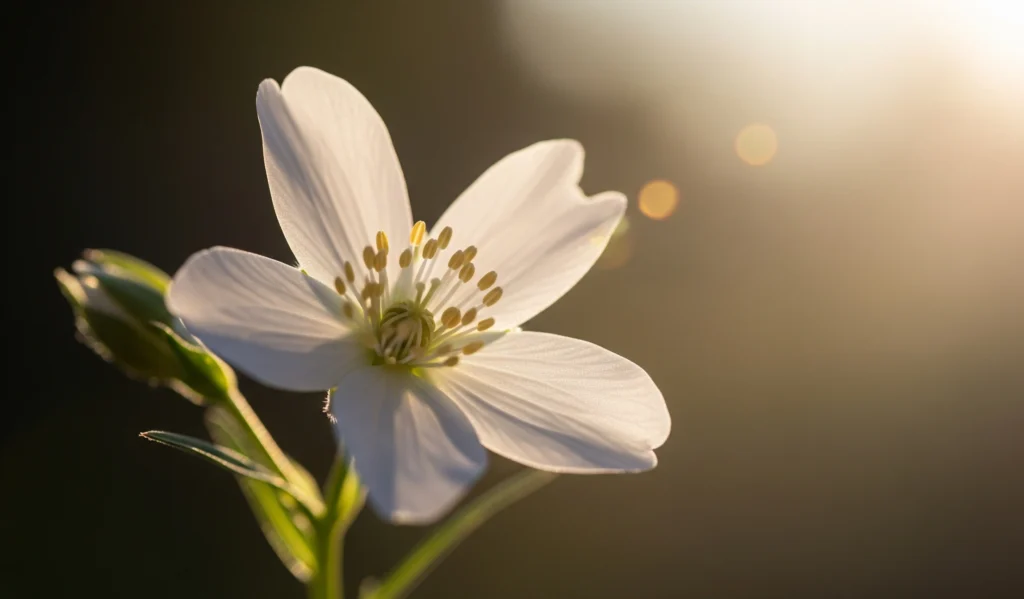
For example, shooting a flower at 1 meter with a 50mm lens at f/4 yields a narrower DOF than at 5 meters. Adjust these settings on your camera and use our Depth of Field Calculator to see real-time results. This helps you fine-tune focus for any scene, from portraits to cityscapes.
How Does Aperture Impact My Depth of Field?
Aperture is your primary tool for controlling depth of field. A wide aperture (e.g., f/2.8) lets in more light and creates a shallow DOF, blurring backgrounds for a cinematic look, perfect for portraits.
A narrow aperture (e.g., f/11) reduces light but increases DOF, keeping more of the scene sharp, ideal for landscapes. For instance, shooting a subject at f/2.8 might give a DOF of 0.2 meters, while f/11 could extend it to 2 meters.
Be mindful that very small apertures (e.g., f/22) may introduce diffraction, slightly softening images. Test different apertures with our calculator at Online Calculator Store to find the perfect balance for your shot.
What Is the Role of Focal Length in Determining My Depth of Field?
Focal length affects how much of your scene appears in focus. Telephoto lenses (e.g., 100mm) create a shallower DOF, isolating subjects against blurred backgrounds, great for portraits. Wide-angle lenses (e.g., 24mm) produce a deeper DOF, capturing more detail, ideal for landscapes.
For example, a 35mm lens at f/4 has a deeper DOF than an 85mm lens at the same aperture and distance. Focal length also changes your field of view, so you may need to adjust your position. Use our Depth of Field Calculator to compare focal lengths and plan your shots for maximum impact.
How Can I Use Depth of Field Effectively in Different Photography Genres Like Portraits and Landscapes?
Depth of field enhances creativity across photography genres:
- Portraits: Use a shallow DOF (f/1.8–f/4) with a 50mm or 85mm lens to blur backgrounds, focusing on the subject’s eyes for emotional impact.
- Landscapes: Choose a deep DOF (f/11–f/16) with a wide-angle lens to keep everything sharp, from foreground rocks to distant mountains.
- Macro: Shallow DOF is common due to close distances, so use f/8 or higher for more focus, but ensure precise focusing.
- Street Photography: A moderate DOF (f/5.6–f/8) balances subject isolation with context, capturing dynamic urban scenes.
Our calculator at Online Calculator Store helps you select the right settings for each genre, ensuring professional results.
What Are the Advantages and Disadvantages of Using Shallow vs. Deep Depth of Field in My Shots?
Here’s how shallow and deep DOF compare:
| Aspect | Shallow DOF (e.g., f/2.8) | Deep DOF (e.g., f/16) |
|---|---|---|
| Advantages | Isolates subjects, creates bokeh, excels in low light | Keeps entire scene sharp, ideal for detailed scenes |
| Disadvantages | Requires precise focus, limited focus range | May need slower shutter speeds or higher ISO |
| Best For | Portraits, macro, product shots | Landscapes, architecture, group photos |
For example, a shallow DOF is perfect for a portrait with a dreamy background, but focusing errors can blur key details. A deep DOF suits landscapes but may require a tripod in low light. Use our calculator to weigh these trade-offs.
Where Can I Find Reliable Depth of Field Calculators and Tools to Help Me?
Our Depth of Field Calculator at Online Calculator Store is your go-to tool for accurate, user-friendly DOF calculations. Accessible in the USA, UK, Canada, Australia, and Europe, it delivers instant results for any camera setup.
Other reliable options include PhotoPills, which offers augmented reality views, and Cambridge in Colour’s flexible calculator. For mobile users, apps like Lens Toolkit or PCAM(iOS and android) are popular, but our web-based tool works seamlessly on any device.
Avoid less reliable tools from obscure sources to ensure precision. Try our calculator today for hassle-free DOF planning.
What Is the Circle of Confusion and Why Does It Matter for My Photography?
The circle of confusion (CoC) is the maximum blur spot size that your eye perceives as sharp, critical for calculating DOF. It depends on sensor size, viewing distance, and print size. For example, a full-frame camera typically uses a CoC of 0.02mm, while an APS-C sensor uses 0.015mm. A smaller CoC means sharper images but a narrower DOF.
Understanding CoC helps you achieve precise focus, especially in large prints viewed closely. Our Depth of Field Calculator at Online Calculator Store factors in CoC for accurate results, ensuring your images meet your sharpness goals.
How Does the Size of My Camera Sensor Influence the Depth of Field?
Your camera’s sensor size significantly affects DOF. Larger sensors (e.g., full-frame) produce a shallower DOF at the same aperture and focal length compared to smaller sensors (e.g., APS-C or Micro Four Thirds).
This is because larger sensors have a larger circle of confusion, allowing more blur before it’s noticeable. For example, a 50mm lens at f/2.8 on a full-frame camera has a shallower DOF than on an APS-C camera, even with the same framing.
Use our calculator to input your sensor size and see how it impacts your DOF for precise control.
Can I Use Depth of Field Calculators for Video Production, and How?
Yes, depth of field calculators are invaluable for video production, especially for focus pullers. They help ensure your subject stays sharp during movement. By inputting lens settings, you can calculate the DOF to plan focus transitions for cinematic shots.
For example, in a dialogue scene, a shallow DOF (f/2.8) keeps the actor in focus while blurring the background. Our Depth of Field Calculator at Online Calculator Store supports video applications, helping you maintain consistent focus for professional footage. It’s perfect for filmmakers aiming for polished, dynamic visuals.
What Is the Rule of Thumb for Depth of Field That I Should Know?
A handy rule of thumb is that one-third of the DOF lies in front of the focus point, and two-thirds lie behind it. To maximize DOF, focus about one-third into the scene.
Another guideline: stopping down one aperture stop (e.g., f/2.8 to f/4) roughly doubles the DOF, though this varies with distance and focal length.
For example, focusing at the hyperfocal distance ensures everything from half that distance to infinity is sharp, ideal for landscapes. Use our calculator to apply these rules accurately.
How Does Changing My Aperture from f/2.8 to f/4 Affect the Depth of Field?
Switching from f/2.8 to f/4 increases DOF, making more of your scene sharp. For example, with a 50mm lens focused at 2 meters, f/2.8 might give a DOF of 0.2 meters, while f/4 could extend it to 0.3 meters. This is because a smaller aperture reduces the light cone, expanding the focus range.
This change is useful for group shots or when you need more context in focus. Test this with our Depth of Field Calculator at Online Calculator Store to see exact changes.
What Is the Best Aperture Setting for Me to Achieve the Depth of Field I Want?
The best aperture depends on your creative goal:
- Shallow DOF (portraits, macro): Use f/1.4–f/2.8 for strong subject isolation.
- Moderate DOF (street, travel): Choose f/4–f/8 for balanced focus and context.
- Deep DOF (landscapes, architecture): Select f/11–f/16 for maximum sharpness.
Be cautious with very small apertures (e.g., f/22), as diffraction can soften images. For example, f/11 is often a sweet spot for landscapes on full-frame cameras. Use our calculator to find the ideal aperture for your specific setup.
Can I Use a Depth of Field Calculator for Applications Outside of Photography, Like Microscopy?
Yes, depth of field calculators are crucial in microscopy to determine the focus range for specimens. In microscopy, DOF is very shallow due to high magnification, so precise calculations are vital.
For example, Nikon’s MicroscopyU calculator uses numerical aperture and wavelength to compute DOF, ensuring sharp images of microscopic structures.
Our Depth of Field Calculator at Online Calculator Store can be adapted for such applications by inputting relevant parameters, making it versatile for scientific imaging.
Are There Any Good Depth of Field Calculator Apps for My Android or iOS Device?
While mobile apps like PhotoPills, Depth Of Field Calculator, and Digital DoF are great for on-the-go calculations, our web-based Depth of Field Calculator at Online Calculator Store is accessible on any device with an internet connection.
PhotoPills offers augmented reality views, while Digital DoF is tailored for cinematographers. These apps are updated regularly, with camera databases current as of October 2024.
For Android and iOS users, Simple DoF Calculator is another reliable option. Try our calculator for seamless, device-agnostic DOF planning.
FAQs
What does depth of field mean in photography?
Depth of field is the distance range in a photo that looks sharp and clear. It helps you decide what’s in focus, making it key for great portraits or landscapes.
How can a depth of field calculator improve my shots?
A depth of field calculator figures out the best aperture, focal length, and distance for your desired focus. It removes guesswork, so your shots look professional.
Does the depth of field calculator work for video too?
Yes, it does! Depth of field rules apply to videography just like photography. Use the calculator to set up shots with that cinematic, blurry-background look.
Is this depth of field calculator easy for newbies?
Totally! It’s built to be simple, so even beginners can use it to learn and control depth of field without feeling overwhelmed.
How reliable is the depth of field calculator?
It’s super accurate, using smart math based on optical science. Photographers at any skill level can trust it for spot-on focus calculations.
Final Thoughts
Mastering depth of field can take your photography to the next level. Our Depth of Field Calculator makes it simple to get sharp, focused shots every time. Give it a try now on Online Calculator Store and watch your images stand out!